
The most well-documented public figure named Nikolai Avilov is the Soviet decathlete who won Olympic gold at the 1972 Munich Games and bronze at the 1976 Montreal Games. For that specific individual, a precise, verified net worth figure is not publicly available as of June 3, 2026. Based on what can be pieced together from public records about retired Soviet-era athletes, a reasonable conservative estimate would place his net worth somewhere in the range of $100,000 to $500,000, but confidence in that range is low because no verified financial disclosures, property filings, or credible wealth reports exist in the public domain. If you are searching for a different Nikolai Avilov, read the disambiguation section below first.
Nikolai Avilov Net Worth: How to Verify Estimates and Method

Marcus Fielding
3 Jun 2026
Which Nikolai Avilov are we actually talking about?

The name "Nikolai Avilov" (also spelled Nikolay Avilov) is not uniquely identifying the way a name like Nicolas Cage is. That means before you trust any net worth figure you find online, you need to confirm it refers to the right person. There are at least two distinct public figures this name could point to, and mixing them up produces completely useless estimates.
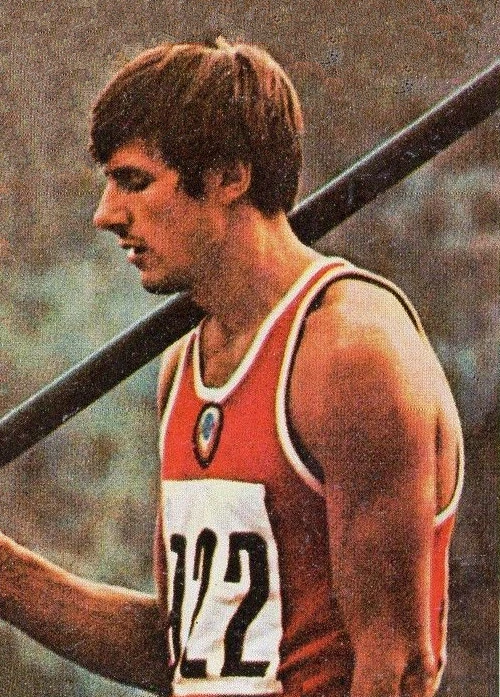
The most prominent is Nikolái Avilov, the retired Soviet decathlete born August 6, 1948. He is the person most people searching this name are thinking of. He set a world record at the 1972 Munich Olympics while winning gold, then earned bronze at the 1976 Montreal Olympics. His IMDb page (nm10533721) lists him as "Self - 1972 Decathlon Winner" in archive footage appearances, which confirms his historical public profile.
Separately, there is a historical Russian political figure named Nikolai Glebov-Avilov, a Bolshevik politician who lived from 1887 to 1937. If you have stumbled onto a net worth figure tied to that name, it is almost certainly a content error on a scraper site conflating two different people. He is not a modern wealth-tracking subject.
To confirm which Nikolai Avilov your source is describing, check for these context clues: occupation listed (decathlete, athlete, Soviet Union), birth year (1948), country of origin (Soviet Union, later Ukraine), and any reference to the 1972 Munich Olympics. If a page mentions a birthdate other than 1948, a different profession, or a business or entrepreneurial background without those athletic credentials, you may be looking at an entirely different person with the same name, possibly a private individual with no reliable wealth data at all.
What net worth actually means (and what it is not)
Net worth is not income, and it is not salary. blank" rel="noopener noreferrer">Pew Research Center distinguishes wealth (or net worth) from income by defining wealth as the value of assets owned minus outstanding debt and treating it as an accumulation of assets rather than a flow of income. It is a snapshot calculation: total assets minus total liabilities. The IRS Internal Revenue Manual describes a more records-based net worth computation that uses cost or amounts of assets and actual amounts of liabilities, rather than valuing assets by market value net worth computations using cost/amounts of assets and actual amounts of liabilities. Assets include things like property, savings accounts, retirement funds, investments, vehicles, and business ownership stakes. Liabilities include mortgages, loans, and credit card debt. What is left after subtracting one from the other is net worth. Pew Research defines it plainly as "the value of assets owned minus outstanding debt," and NerdWallet's framing is equally direct: add up everything you own, subtract everything you owe.
This matters because many celebrity net worth sites conflate annual income or prize money with net worth. An athlete who earned significant prize money or endorsement deals in a given year may have a very different net worth depending on how they managed, spent, or invested that money over decades. For a Soviet-era athlete like Avilov, another layer applies: the Soviet sports system did not pay athletes in the same commercial way Western athletes were compensated. Soviet champions were awarded state honors, pensions, apartments, and sometimes stipends, none of which translate neatly into a modern Western net worth figure.
How net worth gets estimated from public records

For most public figures, researchers build a net worth estimate by triangulating several public data sources rather than finding one authoritative document. Here is how that process works in practice, and which records matter most.
- Property records: Publicly available real estate ownership data (deed filings, land registry records) shows what property someone owns and, sometimes, what they paid for it or what assessed value it carries.
- Business registries: If a person owns or is a director of a registered company, filings in national or regional business registries often list ownership percentages, reported revenues, or asset valuations.
- Court filings and legal proceedings: Divorce proceedings, bankruptcy filings, and civil litigation often surface detailed asset and liability disclosures that are more accurate than any estimate.
- Tax authority records: In some jurisdictions, summary tax data is public (Scandinavian countries, for example). In others, IRS or equivalent filings are private, but audits and enforcement actions sometimes become public.
- Credible interviews and verified earnings reports: An athlete discussing prize earnings or a businessperson disclosing a company valuation in a reputable publication counts as sourced data.
- Sports earnings databases: Archived competition prize pools, national federation records, and Olympic compensation histories help estimate an athlete's career earnings floor.
For Nikolai Avilov specifically, the available public record is thin. Soviet-era Olympic athletes were not paid commercial prize money the way modern Olympic athletes are. Post-Soviet Ukrainian sports authorities may have records of pensions or state honors, but those are not publicly indexed in searchable English-language databases. No property records, business filings, or legal proceedings under his name appear in accessible public databases as of June 3, 2026.
The most defensible net worth range and confidence level
Given the data gaps, here is the most honest assessment possible. The estimate below is based on general knowledge of Soviet-era athlete compensation structures, post-Soviet pension systems, and the typical financial trajectory of retired Olympic champions who later work in sports administration or coaching, which is a common post-career path in that cohort.
| Estimate Component | Estimated Value | Confidence |
|---|---|---|
| State pension / honors stipend | Low to moderate monthly income | Low — no public figure available |
| Real estate (likely a residential apartment) | $50,000–$200,000 | Low — no property records found |
| Savings and liquid assets | Unknown | Very low — no disclosures |
| Endorsements or appearances post-career | Minimal to none | Moderate — Soviet-era athletes rarely had Western-style endorsement income |
| Overall net worth range | $100,000–$500,000 | Low confidence overall |
That $100,000 to $500,000 range is a reasonable bracket for a retired Soviet Olympic champion living in Ukraine or Russia, but it is genuinely a structural estimate, not a verified figure. It is based on what is typical for that demographic, not on documents about Avilov personally. If any site publishes a specific number, say $2 million or $5 million, without citing property filings, verified interviews, or business records, treat that number as fabricated.
Why different websites show wildly different numbers
You have probably already noticed that a quick search for Nikolai Avilov net worth returns several different figures across different sites, sometimes varying by millions of dollars. If you meant the Soviet decathlete Nikolay Avilov, use this guide to judge how credible any Nikolay Mihaylov net worth claim really is. If you meant Vladimiro's Nicola net worth instead, make sure the name and person are the correct match before trusting any number. There are a few specific reasons this happens, and understanding them helps you ignore the noise.
- Copy-paste propagation: One site publishes a speculative number with no methodology. Ten other sites copy it. The figure appears on dozens of pages and starts to look credible simply because of repetition.
- Conflation with other people: Automated content scrapers sometimes pull data from multiple people with similar names and blend them into one profile. A different Nikolai Avilov (possibly a private businessman) may have property or business records that get incorrectly attached to the athlete.
- Currency and era confusion: Soviet-era prize values or state bonuses quoted in rubles get converted without accounting for inflation or exchange rate history, producing numbers that sound meaningful but are economically nonsensical.
- No methodology disclosure: Most celebrity net worth sites do not explain how they calculated a number. Without a methodology, there is no way to check the figure, and no accountability when it is wrong.
- Outdated data: Even when an original estimate was reasonable, it may be years out of date. Net worth changes with asset values, new income, debt repayment, or inheritance, and sites that publish once and never update become less reliable over time.
How to verify this yourself: practical search queries and documents to find

If you want to go deeper than what this site has compiled, here are the practical steps to take and the exact search queries that tend to surface useful documents.
Search queries worth running
- "Nikolai Avilov" OR "Nikolay Avilov" decathlete interview — looks for first-person or journalist-reported financial mentions
- "Николай Авилов" (Cyrillic version) — searching in Russian surfaces Ukrainian and Russian press that rarely appears in English results
- "Николай Авилов" пенсия OR зарплата — translates roughly to "Avilov pension" or "Avilov salary" in Russian-language news
- Nikolay Avilov Ukraine sports federation — checks if he holds a paid administrative role in Ukrainian athletics
- site: sports-reference.com OR site:olympedia.org Nikolai Avilov — sports archive databases list competition histories and sometimes career summaries
Documents that would actually move the needle
- Ukrainian land registry records showing property ownership (publicly accessible via the State Register of Real Property Rights in Ukraine)
- Business entity filings if he holds any directorship in a Ukrainian or Russian company (searchable via YouControl or EGRUL respectively)
- Any court filings in Ukrainian or Russian civil courts involving his name — these sometimes include asset declarations
- Verified biographies or authorized profiles in Ukrainian sports publications that mention post-career income
- Olympic athlete financial disclosure programs — the IOC does not publish these, but national Olympic committees sometimes do in annual reports
One practical flag: if a source cannot tell you where its number comes from, that number is not worth citing. A reliable estimate always has a traceable chain, whether that is a specific property address, a named company, or a quoted interview. If the chain stops at "estimated by editors," it is a guess dressed up as research.
How to use this site's database to get the most current picture
This site is built specifically to track net worth figures for notable individuals named Nicolas, Nikolai, and related name variants. The database is updated regularly as new public records become available, and each entry distinguishes between verified data points and structural estimates. For Nikolai Avilov, checking back here is the most efficient way to find out if new sourced information has emerged, such as a verified property record, a credible interview, or a new role in sports administration that carries a disclosed salary.
To use the database effectively: search for the full name including spelling variants (Nikolai, Nikolay), then check the "last updated" date on the profile entry. If the entry was last updated more than six months ago and involves a subject without recent public activity, treat the figure as a static estimate rather than a current value. The site also cross-references figures against the methodology used, so you can see at a glance whether a number is backed by property records, reported income, or structural estimation.
For context within this site's niche: other Nikolai-variant profiles tracked here, including figures like Nikolai Savic, Nikolai Belikov, and Nikolay Mihaylov, follow the same methodology framework, which makes it easier to compare how confidence levels are assigned across different subjects and see what a well-sourced entry looks like versus a structurally estimated one. If you are specifically looking for Nikolai Savic net worth, use the same sourcing checklist in his profile entry to confirm what is verified versus estimated. If you find that the Avilov entry has a similar confidence rating to profiles where underlying documents are also sparse, that tells you something useful about the current limits of public data on this specific name.
Bottom line: the most defensible thing you can do right now is bookmark the database entry, note the current estimate and its confidence level, and set a reminder to recheck in three to six months. If Avilov gives an interview, if Ukrainian property records surface, or if a sports publication profiles his post-career finances, this site's database is where that update will show up first.
FAQ
How can I tell if a “Nikolai Avilov net worth” number is actually about the Soviet decathlete born in 1948?
Match on multiple identifiers at once, not just the name. Confirm the page mentions the 1972 Munich decathlon (gold) and the 1976 Montreal decathlon (bronze), and check for the August 6, 1948 birthdate. If the source lacks those event references or uses a different birthdate, treat it as likely misattribution.
Why do different websites show wildly different net worth figures for Nikolai Avilov?
Many sites replace net worth with inferred “career earnings” or “prize money totals,” then inflate with modern endorsement-style assumptions. Without a traceable chain like property records, verified interviews, or disclosed business ownership, the number is usually a structural estimate that can drift by millions depending on the site’s assumptions.
If no verified net worth document exists, what evidence would count as “verification” for a Soviet-era athlete?
Look for at least one concrete asset or debt anchor, such as a named apartment ownership record, a court filing tied to him, a documented pension amount with a public source, or a credible interview where assets and liabilities are discussed. Pensions and state honors can be relevant, but they must be tied to specific, attributable public records to qualify as verification.
Can Soviet state pensions or housing entitlements be used to approximate net worth?
They can inform an estimate, but you must be careful because benefits are not the same as transferable assets. A monthly pension is closer to income support than liquid net worth, and state-provided housing may not equal ownership. If a site treats pensions as if they were a cash asset, its net worth logic is likely flawed.
What’s the most common mistake people make when researching “Nikolai Avilov net worth” online?
Failing the disambiguation step. Nikolai Avilov can be confused with other public figures or with historical names that look similar. If the source cannot demonstrate decathlon-specific context (country, Olympic years, event results), the figure is probably not usable.
Should I treat an estimate as “current,” or is it usually outdated?
Treat it as outdated unless the source shows a recent update tied to new evidence. For static profiles with no recent public activity, estimates can remain unchanged for years. A useful decision rule is to recheck when the site’s “last updated” timestamp is recent and when new filings, interviews, or roles appear.
What should I look for in a net worth page to judge its credibility fast?
Verify that the page explains the methodology and points to at least one specific data type, such as a property address, a named employer with salary reporting, or a quote from an identifiable interview. If the page only says “estimated by editors” or provides no sourcing chain, assume the figure is not evidence-based.
How can I search for better documents if English-language databases are sparse for Ukrainian or Russian records?
Try searching in combination with context clues and multiple spellings (Nikolai/Nikolay, Avilov/Avilov). Use terms connected to the decathlon and Olympic years, then add “pension,” “property,” “ownership,” or “sports administration” alongside the birth year (1948). Also search Cyrillic spelling variants, since many official records are indexed only that way.
If I only find an “estimated net worth” figure, is there any safe way to use it?
You can use it only as a very rough scenario range, not a fact. Convert it into an uncertainty band by comparing multiple sources that disclose methodology, then discount any outliers that cite no evidence. If most sites provide the same number without sources, it likely reflects repeated assumptions, not new facts.
What timeline would be reasonable for re-checking the Nikolai Avilov net worth estimate?
Recheck every 3 to 6 months if you are tracking for updates tied to credible signals, such as a new interview, a disclosed appointment in sports administration, or newly indexed property records. If nothing new appears and the profile relies on the same assumptions, you should treat the estimate as unchanged rather than “rising.”
Next Article
Nicholas Vita Net Worth: Estimate, Sources, and How It’s Calculated
Find the right Nicholas Vita, get a net worth range, see evidence used, and learn how it’s calculated and verified.