
Tsar Nicholas II, the last Emperor of Russia, is frequently cited as one of the wealthiest individuals in history, with modern estimates of his pre-1917 fortune ranging from roughly $45 billion to as high as $300 billion in today's money depending on methodology. If you meant Nicolas Niarchos instead of Tsar Nicholas II, the approach to estimating Niarchos net worth is different and has its own set of sources and ranges Nicolas Niarchos net worth. The honest answer is that no single number is fully defensible, because the line between his personal wealth and the Russian state's assets was deliberately blurred, records were destroyed or seized after 1917, and currency conversion across a century introduces enormous uncertainty. That said, the most commonly cited and methodologically grounded range sits between $45 billion and $100 billion (2020s USD equivalent), with some maximalist estimates running higher.
Tsar Nicholas II Net Worth: Imperial Wealth Estimates Explained

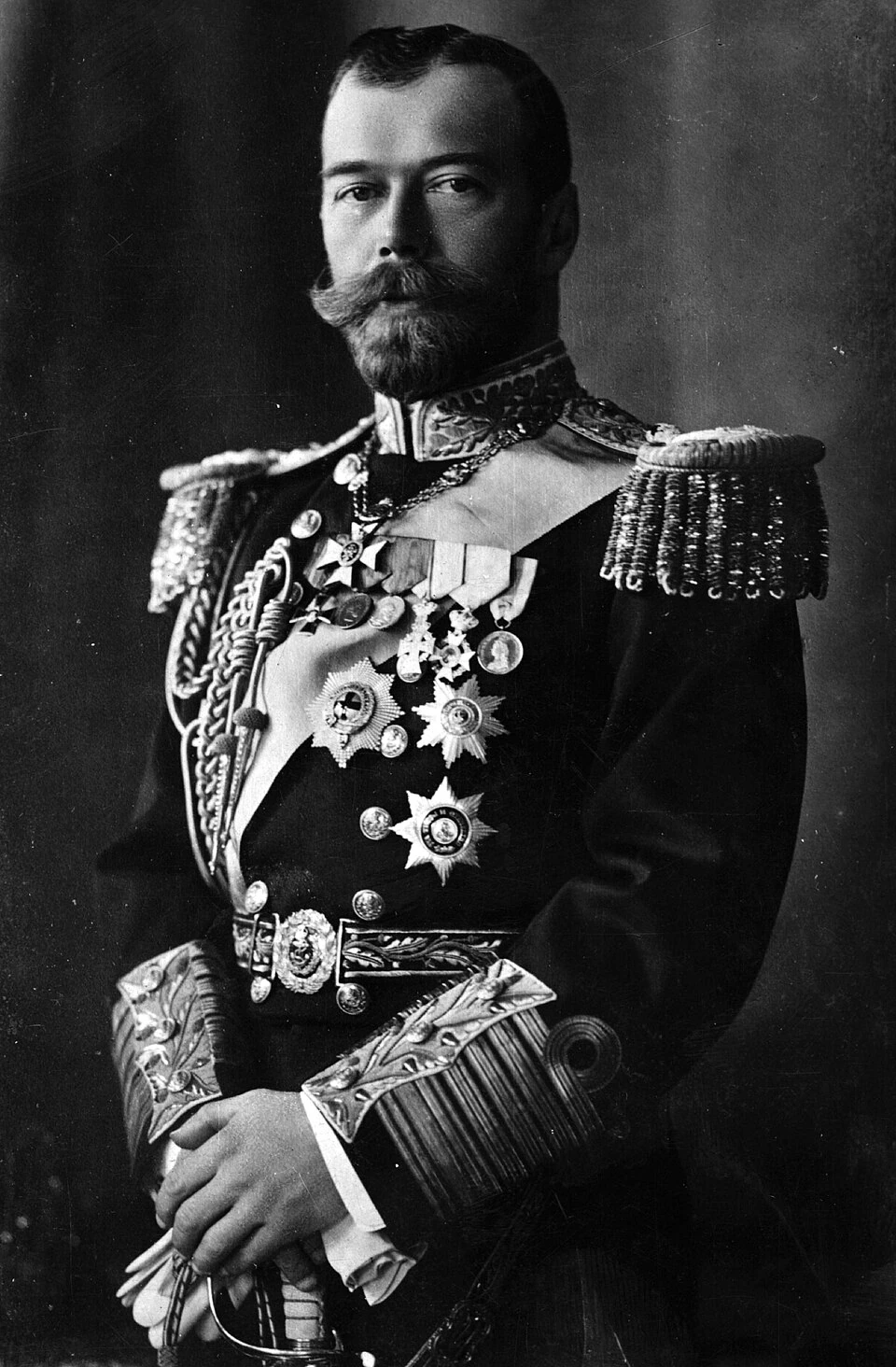
You're in the right place, but let's be clear about who this is
This site covers net worth for people named Nicolas and close variations, including active public figures and historical ones. If you landed here looking for Nicolas Cage, Nicolas Puech, or Nicolas Niarchos, those are separate profiles. Tsar Nicholas II (full name Nikolai Alexandrovich Romanov, 1868-1918) is genuinely relevant here as a historical public figure whose financial standing has been the subject of serious archival and historiographical research. This article is specifically about him: the last tsar, not a celebrity, not a contemporary businessman.
What 'net worth' actually means for a 19th-century emperor

Net worth for a living person is straightforward enough: assets minus liabilities. For a ruling monarch in the late imperial Russian context, it gets complicated fast. Nicholas II sat at the intersection of at least three distinct pools of wealth: his documented personal income and private holdings, the crown property technically owned by the Romanov dynasty as an institution, and the assets of the Russian state itself. Researchers and financial historians treat these very differently, and conflating them produces the wildly varying estimates you'll find online.
The Romanov legal framework, codified in the Svod Zakonov (the imperial legal digest), specified that certain lands, palaces, and revenue streams belonged to the 'crown' rather than to Nicholas as an individual. Crown property was constitutionally distinct from both state property and private imperial property. When historians estimate Nicholas II's 'net worth,' they have to decide which of these buckets to include, and the answer changes the final number dramatically.
Documented sources of wealth: what the records actually show
Annual income and allowances
Nicholas II's personal income is well-documented at approximately 24 million gold roubles per year. This figure came from two primary streams: a fixed annual allowance drawn from the imperial treasury and profits generated by crown farmland and agricultural estates. The 1911 Encyclopaedia Britannica's coverage of the imperial household confirms that the household also drew revenue from bonds and shareholdings, giving Nicholas exposure to financial instruments alongside land-based income.
Physical assets: palaces, land, and movable property

The imperial household controlled an extraordinary inventory of physical assets. These included multiple palace complexes (the Winter Palace, Tsarskoye Selo's Alexander and Catherine palaces, the Peterhof complex, Livadia in Crimea, and others), vast tracts of agricultural and forested land across Russia, and an enormous collection of movable property including the Romanov jewels, artwork, silverware, and court objects. Post-Soviet archival research, including work grounded in the Russian State Historical Archive (RGIA), has produced documentation on many of these holdings.
The RGIA holds records of the Ministry of the Imperial Court, including fund 472 (Chancellery of the Ministry of the Imperial Court), which contains administrative records relevant to court finances and physical property. The Presidential Library (prlib. ru) also hosts digitized item-level records connected to the Ministry of the Imperial Court, including fonds and series information for ceremonial parts of the ministry [records of the Ministry of the Imperial Court](https://www. prlib.
ru/en/item/2046098? mode=full). Fund 496, the Capitulum of Russian Orders, shows another dimension of the court's financial bureaucracy. Online.
archives. ru hosts a guide entry for RGIA “Фонд 496. Капитул российских орденов Министерства императорского двора”, describing Fund 496 and its archival context [Fund 496, the Capitulum of Russian Orders](https://online. archives.
ru/guide/10000000001004/10000071483004/). These archives are publicly catalogued and discoverable through portals like Rusarchives and the Yeltsin Presidential Library.
Item-level evidence: a snapshot
Some item-level spending evidence survives. For example, records from the Alexander Palace indicate that the Imperial Household spent 18,400 roubles in 1905 to purchase its first new automobiles. This kind of granular data point illustrates how researchers can build partial pictures from archival receipts and administrative logs, even without a comprehensive balance sheet. Grand Duke Alexander Mikhailovich's 1932 memoir 'Once a Grand Duke' also provides retrospective testimony on income sources, though historians treat memoir evidence as useful but methodologically weaker than primary financial records.
How historians translate imperial wealth into today's dollars
Converting early 20th-century Russian imperial finances into 2020s USD is genuinely difficult, and the methodology used matters enormously. The main approaches researchers use are gold-standard conversion (pegging the gold rouble to today's gold price), GDP-share conversion (calculating what fraction of Russia's total economic output Nicholas's income or holdings represented and applying that fraction to modern GDP), and purchasing-power parity estimates. Each method produces a different number.
| Method | Rough Modern Equivalent | Key Limitation |
|---|---|---|
| Gold-standard conversion (gold rouble to USD via gold price) | $45B – $65B range | Gold price fluctuates; doesn't capture non-gold assets |
| GDP-share / relative wealth method | $100B – $300B range | Conflates personal and state wealth; amplifies uncertainty |
| Purchasing-power parity (consumer basket comparison) | $30B – $50B range | Understates land and capital assets; better for income flows |
| Combined asset-by-asset reconstruction | $50B – $100B (estimated) | Incomplete records; relies on partial inventories |
The most conservative and arguably most honest approach is to focus on what can be directly documented: the personal income stream of roughly 24 million gold roubles annually, the value of specifically identified personal holdings, and an estimate of the crown-property portfolio. This produces figures in the $45 billion to $65 billion range in 2020s USD. The higher estimates of $150 billion to $300 billion typically include state-adjacent resources Nicholas had effective control over but did not legally own personally.
What we genuinely don't know
The uncertainty here is not just a minor caveat. It is a central feature of any honest answer. Several factors make a precise figure impossible.
- Destroyed and missing records: The 1917 revolution and subsequent civil war resulted in the loss, deliberate destruction, or seizure of significant portions of imperial financial documentation. Not everything survives in the RGIA.
- Legal ambiguity between personal and crown property: The Svod Zakonov's distinction between categories of imperial property was complex, and different historians draw the line in different places.
- Foreign holdings and bank deposits: There have been persistent questions about Romanov funds in foreign banks, particularly in Germany and England. No fully verified accounting of these has ever been publicly produced.
- Jewel and art valuations: Romanov court jewels and artwork represent significant value, but archival research (including post-Soviet work on court jewel histories) has not produced a comprehensive, agreed valuation.
- Currency conversion assumptions: The gold rouble of 1900 does not map cleanly to 2025 USD through any single conversion pathway. Each methodology introduces its own error margin.
- What 'control' means vs. legal ownership: Nicholas had effective control over resources that he did not personally own. Whether those count is a philosophical as much as a financial question.
1917 and after: how the revolution erases any simple net worth figure

Whatever Nicholas II's wealth was at its peak, it effectively ceased to exist as a coherent financial entity after February 1917. His abdication was followed by the nationalization and confiscation of imperial assets. A Bolshevik decree published on July 19, 1918 in Izvestiia (document N 151) formally nationalized the property of the overthrown Emperor and all members of the former imperial house, providing the legal anchor for what had already been happening on the ground since early 1917.
The confiscation machinery was comprehensive. A December 1917 decree on safe deposit boxes empowered Soviet authorities to open and seize the contents of private banking deposits, targeting exactly the kind of financial instruments the Romanovs and their associates held. International records, including US State Department documents (FRUS) from 1918, reference Soviet repudiation of imperial financial obligations and the impounding of Russian assets, showing that the confiscation extended into international financial channels.
Palace contents were inventoried by post-revolutionary commissions, as documented in records from Tsarskoye Selo and the Alexander Palace. The fate of physical objects varied: some were sold internationally to fund Soviet priorities, some were transferred to museums, and some were lost, stolen, or destroyed. Any 'net worth' figure for Nicholas II must therefore be understood as a historical snapshot of pre-1917 holdings, not a number that persisted or could be claimed after 1918.
Nicholas, his wife Alexandra, and their five children were executed in July 1918 in Yekaterinburg, ending any personal financial narrative entirely. Subsequent claims by alleged heirs and various parties to Romanov assets have been contested in courts across Europe for decades, but no substantial recovery of assets has been documented.
The defensible range and how to verify it yourself
Given everything above, here is the most defensible way to think about Nicholas II's net worth in today's money: his personal, legally-owned wealth (income streams, private estates, personal jewelry and movable assets) most likely translated to somewhere in the $45 billion to $65 billion range in 2020s USD, using gold-standard and purchasing-power conversion methods. If you are searching for Nicholas Teo net worth, note that this article focuses on Tsar Nicholas II and uses historical financial records, not modern business accounting Nicholas II's net worth. If you include crown property that he controlled but did not personally own, you can push that to $100 billion or higher. If you include broader state resources, some estimates reach $250 billion to $300 billion, but that number requires attributing Russian state wealth to Nicholas personally, which most financial historians consider methodologically unsound.
The figure you'll see most frequently cited in reputable financial and historical commentary is around $45 billion to $300 billion, which is really just acknowledging the full range of plausible methodologies rather than a precise point estimate. The most honest single number, if you need one, is roughly $50 billion to $100 billion in 2020s USD, covering personal and crown holdings but not state resources.
If you want to dig deeper, here's where to look
- Russian State Historical Archive (RGIA) via the Rusarchives portal: Start with fund 472 (Chancellery of the Ministry of the Imperial Court) and fund 496 (Capitulum of Russian Orders) for financial administration records. Finding aids are publicly available in Russian.
- Yeltsin Presidential Library (prlib.ru): Catalogues imperial court institutional records and has digitized some holdings relevant to household finances.
- US State Department FRUS documents: The Foreign Relations of the United States series includes 1917-1918 documents on Soviet asset seizures and international financial repercussions, which are publicly accessible via the Office of the Historian website.
- Marxists.org document collections: The Decrees of Soviet Power volumes include the December 1917 safe-deposit decree and other confiscation instruments, useful for tracking what happened after abdication.
- Academic historiography: Works by Orlando Figes, Richard Pipes, and Robert Service on the late Romanov period contain financial context grounded in archival research. Greg King's biographical works on Nicholas II also address household finances specifically.
One final note on updates: unlike living public figures whose net worth can shift with a new business deal or asset sale, Nicholas II's historical figure is revised only when new archival material becomes accessible or when scholars publish new methodological work on currency conversion and asset reconstruction. Teo Nicolai’s net worth is often discussed online, but the most credible figures depend on verified sources just like historical wealth estimates do for Tsar Nicholas II.
If you are looking specifically for Henry T. Nicholas III net worth, you will want a separate, modern accounting based on his own businesses and assets rather than this imperial snapshot Nicholas II's historical figure. Post-Soviet archive openings in the 1990s and 2000s produced the most recent significant revisions. Any future updates would most likely come from further digitization of RGIA holdings or the discovery of previously unknown documentation about foreign bank accounts or overseas assets.
FAQ
Why do online “tsar nicholas ii net worth” numbers vary so much (for example $45B vs $300B)?
No. For Tsar Nicholas II, “net worth” estimates are usually a reconstruction of pre-1917 holdings, but the political-legal split between what he personally owned and what the dynasty or the state administered is often handled differently. Because of that, two sources can both be “reasonable” yet produce very different totals.
If I want a single practical range I can trust, which numbers should I anchor on?
You should treat $45B to $65B (2020s USD) as the more personal-wealth-focused range if the study primarily counts documented personal income and identifiable personal holdings plus a constrained estimate of crown-controlled assets. Numbers that jump far higher typically allocate state-adjacent resources to him, which many historians view as methodologically weak.
Which currency-conversion method gives the most defensible estimate?
Yes, but only if you also specify the model used. “Gold-rouble conversion” (pegging the gold rouble to today’s gold value), “GDP-share conversion” (scaling by share of economic output), and purchasing-power approaches can disagree dramatically, especially for a small set of income streams and asset classes rather than a full balance sheet.
Should crown property and state assets be counted as part of his net worth?
If the figure is meant to describe Nicholas’s personal wealth, it should exclude most state assets because they were legally distinct under the imperial legal framework and administered outside his personal ownership. Many inflated totals come from treating crown and state pools as if they were identical to personal net worth.
Was there ever a full “balance sheet” for Nicholas II that historians can use?
Not reliably. The historical record allows researchers to reconstruct some income and some asset categories, but a comprehensive inventory similar to modern accounting is not available. That means estimates are built from partial evidence (administrative records, inventories, receipts, and later reconstructions) rather than a complete audit.
Did the post-1917 confiscations affect only palaces and land, or also financial assets held in banking systems?
Confiscation did not just occur in Russia. Measures around 1917 to 1918 included actions that affected financial instruments held in banking channels, and international correspondence later discussed Soviet repudiation and impounding of assets. So even if some objects survived locally, financial claims abroad were often cut off or redirected.
Do current heir claims mean Nicholas II’s net worth was actually recoverable?
No. Any “heirs” claims you see online are not the same thing as verified asset recovery. The major practical point is that substantial recovery of Romanov assets has not been documented at scale through courts across Europe, so net worth figures generally remain historical reconstructions rather than live, collectible estates.
How can I tell if a “Nicholas” net worth page is actually about Tsar Nicholas II?
For Tsar Nicholas II specifically, you should avoid mixing him up with other people who share similar names. Estimates for unrelated individuals with “Nicholas” and similar surnames use completely different evidence and time periods, so applying the Romanov methodology to them would be incorrect.
When does the estimated wealth refer to, and how important is the reference year?
Use a date label. Because the conversion to “today’s money” depends on methodology and because his wealth was disrupted after early 1917, reputable estimates typically refer to a pre-1917 peak or a pre-abdication snapshot. If a site does not clarify the reference year or the inclusion rules, the number should be treated as less reliable.
How often are tsar nicholas ii net worth estimates updated, and what typically drives a revision?
Expect revisions to be incremental rather than radical. The largest plausible shifts come from newly digitized or newly discovered archival material (for example, additional documentation about court finances or physical inventories) or improved conversion models. Without new evidence, most “updates” online are likely to be re-scoping assumptions rather than changing the underlying facts.
Nicholas Vita Net Worth: Estimate, Sources, and How It’s Calculated
Find the right Nicholas Vita, get a net worth range, see evidence used, and learn how it’s calculated and verified.