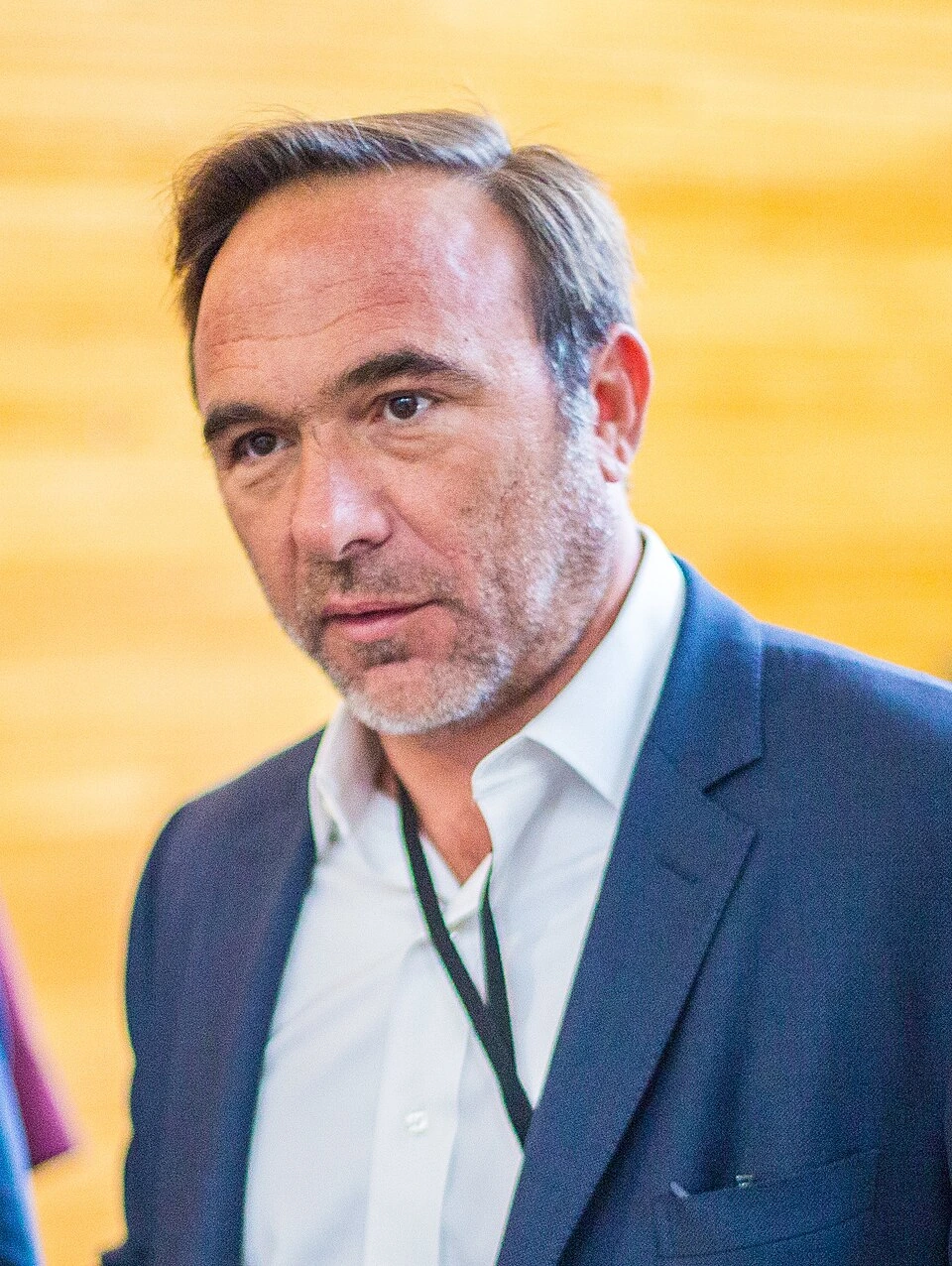
Nicholas G. Karabots was a Greek-American businessman with documented ownership in AMREP Corporation, Kappa Publishing Group, and a private lending entity called Kappa Lending Group, LLC. He also had interests in real estate and winemaking. As of May 2026, no reliable full balance-sheet net worth figure is publicly available for him, partly because he is deceased (his estate appears in SEC filings dated March 2022).
Nicholas Karabots Net Worth: Estimate, Sources, and How to Verify

Marcus Fielding
20 May 2026

This uncertainty is why you will often see different claims about Nicholas Kassotis net worth online. The most credible shares-based estimates from Benzinga and GuruFocus are both anchored to his AMREP equity stake alone, and both platforms explicitly warn those figures are incomplete.
If forced to give a working estimate, his total wealth at or near the time of death likely ran into the tens of millions of dollars when accounting for AMREP equity, Kappa Publishing Group, private real estate holdings, and lending income, but that figure involves significant assumptions. Here is exactly what the evidence supports and what it does not.
Who exactly is Nicholas Karabots (and why search results get confusing)

SEC filings use the full name "Nicholas G. Karabots" consistently across Schedule 13D filings from the mid-2000s, AMREP proxy statements (including the 2015 DEF 14A), and a March 2022 Form 4 XML where the reporting entity is listed as the "Estate of Nicholas G Karabots." That middle initial G is the clearest identifier tying all of these records to the same person.
The spelling confusion happens in a couple of ways. First, some people search for "Nicholas Karabots" without the middle initial and get mixed results. Second, there is at least one LinkedIn profile for a "Nicholas Karabatsos" (note the different suffix), who is an entirely different person with no documented connection to AMREP or Kappa Publishing. That variant spelling has nothing to do with the business and investing record of Nicholas G. Karabots, but it shows up in searches and creates noise. The safest disambiguation method is to look for the middle initial G and cross-reference with AMREP Corporation or Kappa Publishing Group.
The March 2022 Form 4 filing is also important for another reason: it confirms that Nicholas G. Karabots had died by that point, since shares were being sold by his estate. ProPublica's Nonprofit Explorer records for the Karabots Foundation similarly list him as "Nicholas G Karabots Dec'd" in governance filings. So as of May 2026, any estimate of his net worth is technically a retrospective figure, reflecting wealth that now sits inside his estate.
What "net worth" actually means on this site
Net worth is total assets minus total liabilities, period. It is not an annual salary, not a company's revenue, and not the market cap of a business someone partially owns. For someone like Nicholas G. Karabots, who ran or co-owned multiple private businesses, net worth would ideally include the estimated value of his equity stakes in those companies, any real estate holdings, cash and investment accounts, lending assets (such as Kappa Lending Group's loan book), minus debts. Annual salary or dividends he received during his lifetime are a completely separate metric, one that feeds into net worth over time but is not the same number.
Where this gets tricky for private individuals is that most of those inputs are not public. What is public is his AMREP share ownership, documented in SEC filings. Everything else requires either disclosed tax or estate records (not publicly available at this level) or credible media reporting. That gap between what is verifiable and what is estimated is exactly why different websites publish very different numbers, and why you should treat any single figure with skepticism unless it explains its own methodology.
The best available net worth estimate for Nicholas G. Karabots

Two financial data platforms publish a figure. Benzinga, as of its May 9, 2026 recalculation date, displays a net worth for "Nick G Karabots" of negative $1.86 million and explicitly states this is "based on reported shares in AMREP Corp." GuruFocus shows "at least $0 dollars" as of January 1, 2026, also framed as derived from SEC filings. Both figures are, by the platforms' own admission, shares-anchored proxies, not full net worth calculations. Neither accounts for Kappa Publishing Group, private real estate, winemaking investments, or the lending income from Kappa Lending Group, LLC.
For context on the AMREP equity piece: AMREP's market cap was approximately $145.33 million as of May 6, 2026, according to Stockanalysis. The exact size of the Karabots estate's remaining AMREP stake would need to be confirmed via the most recent beneficial ownership disclosures, but even a modest percentage of that market cap represents a meaningful dollar figure. In the March 2022 Form 4, shares were sold at $10.45 each in a privately negotiated transaction, which gives a reference point for how the estate was unwinding equity.
The National Herald's 2020 list of the 50 Wealthiest Greeks in America listed Nicholas G. Karabots based on his ownership of Kappa Publishing Group (puzzle magazines and books), real estate interests, and winemaking operations, in addition to AMREP. That coverage suggests his total wealth picture was considerably broader than the SEC-filings-only estimates capture.
A reasonable bounds estimate, combining his disclosed AMREP equity at or near the 2022 transaction price, the likely private-company value of Kappa Publishing Group, and other disclosed interests, would suggest total assets likely in the range of $30 million to $100 million at or near the time of death, before accounting for any liabilities. That range is wide because the private-business valuations are unverified. Treat it as a working hypothesis, not a confirmed figure.
| Source | Estimate | Methodology | Confidence |
|---|---|---|---|
| Benzinga (May 9, 2026) | -$1.86 million | AMREP shares only (SEC filings) | Low (incomplete) |
| GuruFocus (Jan 1, 2026) | At least $0 | AMREP shares only (SEC filings) | Low (incomplete) |
| National Herald (2020) | Top 50 Wealthiest Greeks in America | Multiple businesses cited (no dollar figure) | Medium (no balance sheet) |
| SEC Form 4 (March 2022) | Shares sold at $10.45/share by Estate | Primary transaction record | High for this transaction only |
| Bounds estimate (this article) | $30M to $100M at time of death | AMREP equity + private business assumptions | Low-medium (partially estimated) |
Where to verify the numbers yourself
The most reliable sources, in order of trustworthiness, are SEC EDGAR, ProPublica's Nonprofit Explorer, and credible media like The National Herald. Here is how to use each one.
- SEC EDGAR (edgar.sec.gov): Search for "Nicholas G Karabots" or "Karabots" as a filer or insider. Form 4 filings will show share transactions with dates and prices. Schedule 13D/13G filings will show beneficial ownership percentages. Proxy statements (DEF 14A) for AMREP Corporation will list his board role and ownership table.
- ProPublica Nonprofit Explorer (projects.propublica.org/nonprofits): Search for the Karabots Foundation to find IRS Form 990-PF filings. These show the foundation's net assets, officer names, and whether Nicholas G. Karabots is listed as deceased. This is governance evidence, not personal wealth, but it corroborates identity and timeline.
- AMREP Corporation investor relations and filings: Search EDGAR for AMREP Corp (ticker: AXR) 10-K and 10-Q filings, which describe the Kappa Lending Group related-party loan arrangement. This documents his lending activity beyond equity ownership.
- The National Herald archive: The 2020 "50 Wealthiest Greeks in America" list is a credible media source that identifies his business portfolio by name. Not a verified balance sheet, but a useful framing reference from a publication with editorial accountability.
- State property records: If his estate holds real estate in New Mexico (AMREP's primary real estate market) or Pennsylvania (Kappa Publishing was based in the Philadelphia area), county assessor databases can provide taxable property values as a floor estimate for real estate assets.
Skip secondary aggregators like celebrity-net-worth sites unless they explicitly cite an SEC filing or property record you can trace yourself. If you are also searching for Nikolas Tsakos net worth, use the same standard of verifying figures against primary documents rather than relying on untraceable estimates. Most do not, and the Benzinga and GuruFocus examples above show that even the more data-focused platforms are working from a narrow slice of the full picture.
How Nicholas G. Karabots built and generated wealth

His wealth came from several distinct streams, and understanding them is essential for appreciating why a shares-only estimate misses so much.
- AMREP Corporation equity: He was a major shareholder and at various points served as vice chairman of the board, giving him both financial upside from stock appreciation and a governance role. He resigned as vice chairman in 2013 according to The National Herald, shifting focus to private acquisitions while retaining a significant equity stake.
- Kappa Publishing Group: This was a privately held company he owned that produced puzzle magazines and books. Private publishing companies of this scale can generate meaningful recurring cash flow, though exact revenues are not publicly filed.
- Kappa Lending Group, LLC: SEC filings describe this entity, owned by Nicholas G. Karabots, as holding a loan to AMREP Southwest. This is a related-party lending arrangement that would generate interest income and give him additional financial leverage over AMREP's real estate operations.
- Real estate interests: The National Herald's 2020 list and AMREP's own operations (primarily in New Mexico) suggest he had real estate exposure, both through AMREP equity and potentially through direct property holdings.
- Winemaking: The National Herald also referenced winemaking as part of his business portfolio. This is the least documented of his interests from a public-records standpoint, but it indicates a diversified private holdings strategy.
- AMREP subscription fulfillment services: SEC filings note that AMREP provided subscription fulfillment services to a business he owned or controlled, suggesting operational revenue relationships between his various companies.
What moves (or moved) a net worth figure like this
For someone with this kind of portfolio, net worth shifts for a handful of specific reasons, and tracking those reasons is how you update an estimate over time.
- AMREP stock price changes: Because his AMREP stake was large enough to require SEC disclosure, any meaningful movement in AMREP's share price directly affected the market value of that holding. AMREP's market cap of $145.33 million as of early May 2026 reflects current pricing, but that number has moved over the years.
- Equity sales by the estate: The March 2022 Form 4 shows shares being sold at $10.45 each. Each such transaction converts equity value into cash (or distributes assets to heirs), changing both the estate's AMREP ownership percentage and its liquidity picture.
- Private business valuations: Kappa Publishing Group's value depends on its revenue, subscriber trends, and publishing market conditions. None of this is publicly reported, but any acquisition, sale, or wind-down of that business would be a major net worth event.
- Lending income and loan repayment: The Kappa Lending Group loan to AMREP Southwest generates interest income. If that loan was repaid, restructured, or written off, it would affect the estate's asset base.
- Estate distribution and taxes: After death, estate taxes and probate processes redistribute assets. Depending on jurisdiction and asset structure, a significant portion of gross estate value may go to taxes or charitable entities like the Karabots Foundation before heirs receive anything.
- Real estate market conditions: If the estate holds property in New Mexico or elsewhere, those values fluctuate with local markets and AMREP's own development activity.
How to audit the estimate and avoid common mistakes

The biggest mistake readers make is treating a number from a financial aggregator site as a verified figure. Benzinga's negative $1.86 million estimate is a classic example of what happens when you anchor entirely to share counts without accounting for the full picture: it may reflect a moment when reported share disposals outpaced recorded acquisitions in the filing history, producing an arithmetically negative result that does not represent actual insolvency. GuruFocus is more cautious, landing at "at least $0," but that is almost useless as a practical figure.
The correct audit approach is to start with primary SEC documents. Most trustworthy primary documentary evidence for the underlying inputs in such an audit comes from SEC EDGAR filings, including Form 4 for share transactions, 13D/13G for beneficial ownership, and proxy statements for governance and ownership framing primary SEC documents.
Pull the most recent Schedule 13D or 13G filed under the Karabots name to find the last disclosed ownership percentage, then multiply that by AMREP's current share price and outstanding share count to get a market-value estimate for just the AMREP stake. Add any other publicly documented assets you can trace, note what you cannot verify (private businesses, real estate not in public databases, liabilities), and label the result as a partial estimate with a stated confidence level.
That is more honest and more useful than any single number a secondary site will give you.
Confidence level for the working estimate in this article: medium-low. The AMREP equity component is traceable to primary SEC filings with high confidence. The private business and real estate components are inferred from credible media reporting (The National Herald) and SEC related-party disclosures, but are not verified with balance sheets. The total range of $30 million to $100 million reflects that uncertainty. Anyone researching this topic should check SEC EDGAR for the most recent beneficial ownership filings under the estate, since share sales may have continued after the March 2022 transaction.
One more practical note: because this is an estate situation, not a living individual's finances, the net worth picture is now largely frozen and redistributing. New information that would update the estimate would most likely come from probate court records (if publicly accessible in his state of domicile), updated 990-PF filings from the Karabots Foundation showing asset transfers, or further SEC Form 4 filings if the estate continues selling AMREP shares.
Set a reminder to check EDGAR every few months if you need a current figure. Readers interested in comparable cases of Greek-American business figures with documented SEC footprints may find it useful to compare methodologies used for similarly structured individuals, such as Nikolas Tsakos or Nicolas Kokkalis, where the same primary-source-first audit approach applies. You can apply the same primary-source-first approach when researching Nicolas Kokkalis and Chengdiao Fan’s wealth.
That framework is also how you can evaluate Nicolas Kokkalis net worth using primary records instead of aggregator estimates. If you want another example of how to evaluate a reported Nikolas Tsakos net worth figure, use the same primary-source-first approach described here.
FAQ
Why do “Nicholas Karabots net worth” figures sometimes show negative numbers?
A negative total usually comes from an incomplete proxy calculation, often shares-anchored math that compares recorded share disposals against acquisitions, without valuing private assets or considering that the person was not reporting a full balance sheet. In an estate context, share sales can temporarily make a simplified model look “insolvent” even when other assets are present but unmodeled.
How can I confirm I am looking at the correct person when searching “Nicholas Karabots net worth”?
Use the middle initial and cross-reference a specific corporate footprint, such as AMREP Corporation or Kappa Publishing Group. The “Nicholas Karabatsos” LinkedIn results are a common search trap because the spelling variant can point to a different individual with no documented link to the SEC record.
If the SEC filings only let me estimate the AMREP stake, what is the best way to handle missing assets in my own calculation?
Treat anything not directly traceable to filings, probate/estate records, or clearly identified property records as “unverified.” Report your final number as a partial estimate (for example, “AMREP-only market value” plus “other assets likely present, not quantified”) and assign a confidence level to each component, rather than forcing them into one blended net worth number.
Should I use the estate’s net worth at the time of death or at the latest share-sale date?
Most published estimates implicitly mix timing. For an estate situation, clarify your reference point. The most defensible approach is to anchor calculations to (a) the last disclosed ownership snapshot near the time of death and (b) confirm whether the estate continued selling afterward via later Form 4 filings, then present both “near-death” and “latest disclosed” versions.
How do I check whether the beneficial ownership percentage in a Schedule 13D or 13G is still current?
Look for the most recent amendment under the same name and compare the last reported ownership percentage to any later Form 4 transactions by the estate. A Schedule 13D/13G amendment updates ownership disclosures, but Form 4 filings can still show intervening disposals, so you should use the most recent documents together.
What exactly should I multiply when converting an AMREP ownership stake into a dollar estimate?
Use the estate’s disclosed beneficial ownership share count or percentage from the latest filings, then convert to market value using AMREP’s current share price and the outstanding share count used for that period’s market-value context. Don’t assume the same share price or share count across years, because splits, issuances, and timing differences can materially change the result.
Why can two reputable platforms produce wildly different net worth numbers for the same person?
Because they can be relying on different slices of the record. If one calculation only models reported AMREP shares and another takes a more conservative stance (for example, outputting “at least zero” due to incomplete inputs), the outputs will diverge even if both are cautious. Differences are amplified when private businesses, real estate, winemaking interests, and liabilities are not captured.
Can the National Herald “wealthiest” list be used as a net worth number directly?
It is better treated as qualitative corroboration, not a final valuation. That kind of coverage can indicate breadth of assets and a plausible total picture, but it typically does not replace the need for traceable asset values and liabilities, especially when you want a verifiable estimate methodology.
Do dividends, salary, or lending income change net worth in a different way than share price?
Yes. Dividends, salary, and interest affect net worth over time by increasing cash or investments, but they are not net worth by themselves. Net worth depends on total assets minus liabilities at a given date, so lending income matters only to the extent it created or preserved assets that can be valued (which is often not fully disclosed).
What probate or estate updates should I look for if I want the most current “Nicholas Karabots net worth” picture?
For updates beyond share filings, the most likely sources are probate court records (if publicly accessible in the relevant state), foundation-related disclosures such as updated 990-PF filings showing asset transfers, and any further SEC Form 4 activity by the estate. If you only recheck SEC EDGAR, you may miss non-SEC asset movements that affect the estate’s total.
What is the most common research mistake when estimating net worth from SEC records?
Assuming SEC share disclosures equal total wealth. The SEC record is strong for the AMREP equity component, but it does not automatically value private companies, real estate, or the full lending asset base. The correct practice is to label your estimate as partial and explicitly state what you cannot verify.
Next Article
Nicolas Kokkalis Net Worth: How to Verify Reliable Estimates
Verify Dr Nicolas Kokkalis net worth using public evidence, disambiguation steps, and net-worth estimation methods.