
Nicolino Locche's net worth at the time of his death in 2005 is estimated at roughly $100,000 to $300,000 USD. That range accounts for career boxing earnings across a professional record that stretched from the late 1950s through the mid-1970s, adjusted for what we know about fight purses in that era, post-career income patterns for Argentine boxing legends, and the near-total absence of verified contract or asset documentation in the public record. There is no credible, sourced figure anywhere near the inflated numbers some celebrity wealth sites publish for him.
Nicolino Locche Net Worth Estimate Explained and Verified

Marcus Fielding
14 May 2026
Making sure we're talking about the right person
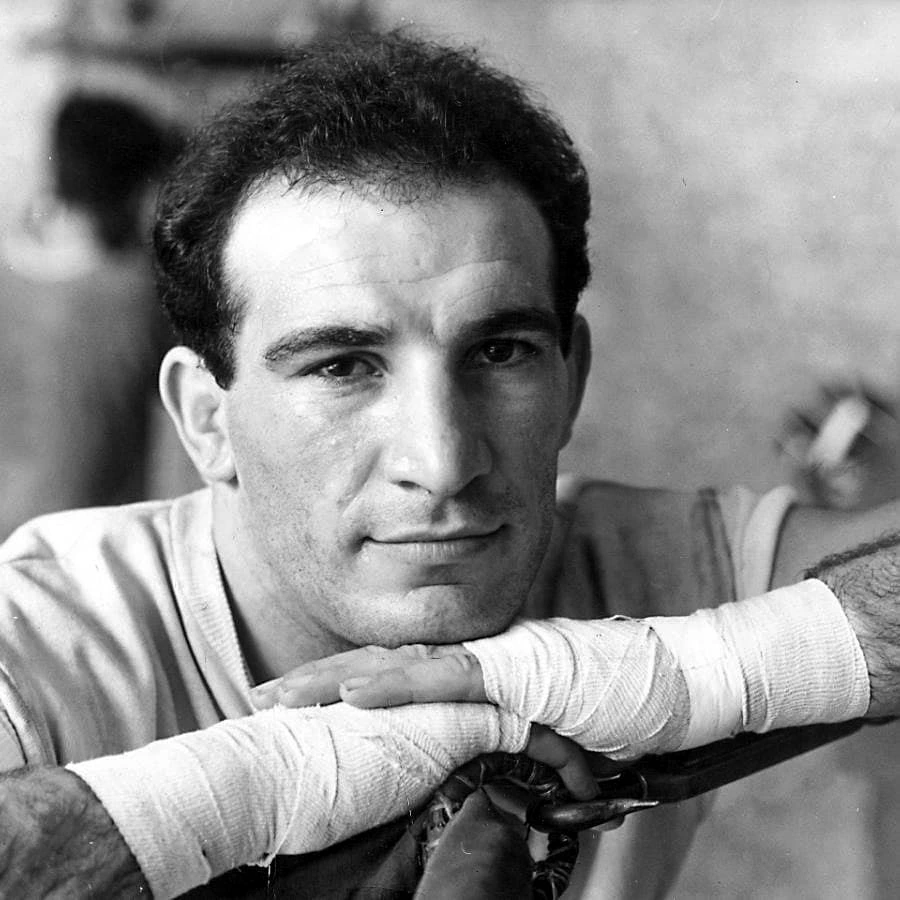
Nicolino Locche's full legal name is blank" rel="noopener noreferrer">Nicolino Felipe Locche. He was an Argentine professional boxer born September 2, 1939, and he died September 7, 2005, just days after his 66th birthday. His ring nickname was "El Intocable" (The Untouchable), a name that reflected his famously evasive, defensive style. He is not a business figure, a musician, or a social media personality. If you landed here looking for a living Nicolas with a modern digital footprint, you have the wrong person. If you meant the living Nicolas Sturniolo instead, you will likely find the kind of net worth details and updates that are not available for Locche living Nicolas with a modern digital footprint.
The name overlap risk is real on a site covering figures like Nicola Bulgari, Nicolae Stanciu, or Nicolo Laurent, all of whom are alive and have active income streams. Locche is a historical figure whose wealth needs to be assessed retrospectively, which changes the methodology entirely. His International Boxing Hall of Fame induction in 2003 and his legendary status in Argentina make him a genuinely notable subject, but it also means his financial data comes from an era with far less public disclosure than today's athletes face.
The net worth estimate, as directly as possible
The most defensible estimate for Nicolino Locche's peak or lifetime net worth sits between $100,000 and $300,000 USD. The lower end of that range reflects a conservative reading: mid-century Argentine boxing purses were modest, the sport's TV and sponsorship economy in Argentina was underdeveloped compared to the U.S. market, and there is no documented evidence of major asset accumulation (real estate portfolios, business investments, or endorsement contracts of significant scale). The upper end acknowledges his status as a genuine star who sold out Luna Park in Buenos Aires repeatedly, held the WBA Junior Welterweight title from 1968 to 1972, and would have commanded above-average purses by Argentine standards.
| Estimate Tier | USD Range | Basis |
|---|---|---|
| Conservative floor | $100,000 | Modest era purses, limited documented assets, no verified endorsements |
| Most likely range | $150,000 – $250,000 | Career earnings adjusted for era, title fight premiums, post-career appearances |
| High-end ceiling | $300,000 | Assumes sustained gate income, regional sponsorships, and undocumented assets |
| Inflated online claims | $1M+ | No methodology; treated as unreliable speculation |
How the estimate is built: earnings, assets, and liabilities

Without primary contract records (which are not publicly available for Locche's fights), the estimate is built from three layers: known fight context, era benchmarks, and post-career income patterns.
Fight purses and career earnings
Locche's professional record finished at 117 wins, 4 losses, and 14 draws with 1 no contest, spanning roughly 15 to 17 years of active competition. That volume of fights, even at modest per-fight guarantees, adds up. One non-authoritative source puts his purse for the December 12, 1968 WBA title fight against Takeshi Fuji in Tokyo at around $5,000 to $40,000 USD, a wide spread that tells you more about the unreliability of that figure than about Locche's actual earnings. One non-authoritative fan or legacy source puts Locche’s December 12, 1968 WBA title fight purse against Takeshi Fuji in Tokyo at around $5,000 to $40,000 USD, which highlights the unreliability of that specific figure rather than Locche’s actual earnings December 12, 1968 WBA title fight against Takeshi Fuji in Tokyo. Title-fight purses for junior welterweights in the late 1960s typically ranged from $5,000 to $50,000 for the challenger or defending champion, depending on the market and promotion. His five title defenses after winning the belt would have carried similar or slightly higher fees. Regular bouts in Argentina, particularly the Luna Park sellouts, would have earned considerably less per fight.
Assets and post-career income
There is no documented evidence in the public record of significant real estate holdings, business ownership, or investment portfolios linked to Locche. His post-career years appear to have been spent largely in Argentina, where he remained a beloved cultural figure. Some post-retirement income likely came from personal appearances, boxing events, and media engagements, as is common for Hall of Fame-level fighters who maintain a public profile in their home country. His Hall of Fame induction in 2003 would have renewed interest in his legacy. None of this is documented in financial disclosure records, so any figures here are estimates.
Liabilities and wealth erosion factors
Locche's career played out against a backdrop of Argentina's recurring economic instability, including currency devaluations and financial crises that significantly eroded the real value of savings held in Argentine pesos. Any career earnings held domestically rather than converted to hard currency or invested in tangible assets would have lost substantial purchasing power over time. This is a common and often overlooked factor when estimating historical net worth for Latin American athletes of his era.
What made Locche's career financially significant (or not)
Several specific factors shaped how much wealth Locche was realistically able to build over his career.
- World title tenure: Holding the WBA Junior Welterweight title from 1968 to 1972 with five defenses is the single largest income event in his career. Title fights carry premium purses and attract bigger crowds and media coverage.
- Fight volume: 136 professional bouts is an enormous career volume. Even at $500 to $2,000 per non-title fight, the cumulative total is meaningful, though manager and trainer fees (typically 33% to 40% of a purse) reduce the fighter's take significantly.
- Venue and market: Luna Park sellouts in Buenos Aires indicate real drawing power at home, but Argentina's boxing market in that era did not generate American-scale gate receipts or television revenue.
- Era limitations: Pre-HBO, pre-pay-per-view boxing meant no massive broadcast rights fees for fighters. Purses for world champions in the late 1960s and early 1970s were a fraction of what comparable champions earn today.
- No documented major endorsements: Unlike modern athletes, there is no public record of Locche holding significant commercial endorsement contracts with brands that would have added substantially to his income.
- Hall of Fame recognition: The 2003 International Boxing Hall of Fame induction came two years before his death and kept him in the public eye, likely generating modest appearance fees.
Why the numbers online are all over the place

If you have already searched for Nicolino Locche's net worth before landing here, you have probably seen figures ranging from implausibly small to wildly large. Online posts that claim specific Nicolino Locche net worth figures often mix guesses, copied numbers, and missing sourcing. This also explains why searches for Nicolae Guta net worth can produce results that are either exaggerated or completely unsupported. Here is why that happens and how to filter out the noise.
The copy-paste problem
Most celebrity net worth figures online originate from one or two sites, then get copied across dozens of others without any verification. For a historical figure like Locche, where no primary financial documentation is publicly available, a single speculative number entered by an anonymous contributor years ago can circulate indefinitely. Sites like the one flagged in our research as "vipfaq" publish very large numbers for Locche with no sourcing, no methodology, and no acknowledgment of uncertainty. Treat any site that gives you a precise, large figure without explaining where it came from as unreliable.
Confusing lifetime earnings with net worth
Lifetime career earnings and net worth are not the same thing. A boxer who earned $500,000 across a career but paid 35% to management and trainers, lived on the remainder for decades in a country with recurring inflation crises, and left no documented investment portfolio did not die with $500,000 in net worth. This conflation is one of the most common errors in celebrity wealth reporting, particularly for athletes from earlier eras.
Nickname and identity confusion
"El Intocable" is a distinctive enough nickname that confusion with other boxers is unlikely, but the broader "Nicolas" name family does create occasional misdirection. Searches for Nicolas or Nicolino can pull up living public figures with far larger documented wealth, and some aggregator sites may blend or mislabel profiles. If you were actually trying to find Nicolo Laurent net worth, the identity mix-ups discussed here can easily send you to the wrong profile. Always confirm the birth and death dates (September 2, 1939 to September 7, 2005) and the Argentine boxing context before accepting any figure.
Currency and era adjustments
Some sources quote historical purse figures without adjusting for inflation or without clarifying whether amounts are in contemporary Argentine pesos, US dollars, or inflation-adjusted modern dollars. A $10,000 purse in 1968 is roughly equivalent to $90,000 in 2026 purchasing power. Conversely, that same amount held in Argentine pesos through the country's economic turbulence would have lost most of its real value. Neither adjustment appears consistently in the secondary sources covering Locche.
How to verify this and what to do next
If you want to push further than this estimate, here is where to look and what to realistically expect.
- BoxRec (boxrec.com): The most reliable public record of Locche's professional fight history. It confirms his 117-4-14 record, title reign dates, and opponent information. It does not publish purse amounts.
- International Boxing Hall of Fame (ibhof.com): His 2003 induction is confirmed here. The IBHOF archive may contain biographical materials that shed light on career context, though not financial records.
- Argentine sports archives: Clarin, La Nacion, and Infobae have published retrospective features on Locche. These are culturally rich sources but not financial disclosure documents.
- Wikipedia (cross-referenced with BoxRec): Useful for biographical and career facts. Treat any financial figures on Wikipedia without inline citations as unverified.
- Reject any site that gives a precise net worth figure without explaining its methodology. Precision without sourcing is a red flag, not a sign of accuracy.
For context within this site's broader coverage of notable Nicolases and variants, Locche sits at the opposite end of the wealth spectrum from figures like Nicola Bulgari, whose net worth runs into the billions through inherited jewelry empire stakes. He is also very different from living athletes like Nicolae Stanciu or Nicolo Bulega, who have active contracts and verifiable current income. Because Nicolo Bulega is a living, active fighter, his net worth discussions can be based more directly on current earnings and contracts than Locche’s largely undocumented financial record. Nicolae Stanciu net worth is often discussed online, but those figures typically need careful sourcing since current athletes’ earnings and brand income can be mixed together. Locche's case is closer to a historical research exercise than a current financial profile, which means the honest answer involves a range and a clear acknowledgment of what we do not know.
The bottom line: Nicolino Locche was one of the greatest defensive boxers in history and a genuine Argentine sporting icon, but the financial record of his career is thin, scattered, and largely undocumented in any primary source available to the public. The $100,000 to $300,000 range is the most responsible estimate based on what can be reasonably inferred. Anyone publishing a number significantly outside that range without sourcing it to verifiable records should be treated with skepticism.
FAQ
Why does the article give a net worth range instead of one exact number for Nicolino Locche?
Because there is no publicly available primary documentation of Locche’s contracts, savings, or asset holdings. With only scattered fight context, era-based purse benchmarks, and no verified investment or real estate records, a single precise figure would be speculative rather than evidence-based.
Did Nicolino Locche make most of his money from title fights, or from the regular bouts after and between them?
Title bouts likely paid above average, especially given his star status and repeated Luna Park sellouts. However, a long pro career with many bouts means the bulk of realistic earnings typically comes from the accumulation of regular-fight purses, not just a handful of championship events.
How should I interpret purse figures if I see them quoted in different currencies or in today’s dollars?
Be cautious. Secondary sources often mix US dollar amounts, contemporary Argentine currency, and inflation-adjusted equivalents without clearly stating which method they used. A number quoted without a date and conversion logic can be misleading for historical net worth calculations.
If the article says his net worth is estimated at $100,000 to $300,000, does that mean he earned that exact amount during his boxing career?
No. Net worth is not total gross earnings. Taxes, managers and trainers, living costs, and inflation and currency effects can drastically reduce what remains. Also, net worth at death reflects decades of spending and potential investment outcomes, not just ring income.
Could Locche have had significant wealth that is simply undocumented in public sources?
It’s possible, but the burden of proof is high. The article notes no credible public evidence of major asset accumulation like a large real estate portfolio or business ownership. Without documentation, the responsible approach is to keep the estimate conservative and transparent about missing records.
How do Argentina’s inflation and currency crises affect a historical net worth estimate for Locche?
If earnings were held primarily in Argentine pesos and not converted to hard currency or invested in inflation-protected assets, much of the purchasing power could erode over time. That means even a decent nominal income during a career may translate into a much smaller real wealth figure decades later.
What would be the strongest kind of evidence that could move the estimate higher or lower?
Verified contract records, detailed tax or estate documentation, contemporaneous reporting that clearly ties income to specific dates and amounts, and credible documentation of ownership in significant assets or businesses. In their absence, estimates stay within a bounded range rather than jumping to large precise numbers.
Why do celebrity net worth sites often publish inflated or precise numbers for Locche?
Many sites reuse a single speculative figure across multiple pages, then present it as fact without methodology. When a site provides a very specific large number for a historical figure while failing to explain sourcing, uncertainty, or calculations, treat it as unreliable.
How can I confirm I’m looking at the correct person when searching for “nicolino locche net worth”?
Cross-check identity basics before trusting any result. Locche is Nicolino Felipe Locche, Argentine, born September 2, 1939, died September 7, 2005, and he is associated with the “El Intocable” boxing persona. If the page describes a living person with different dates, it is likely a misidentification.
Does the article’s range represent Locche’s peak net worth or his net worth at death?
The framing is toward what can be defended for his net worth at the time of death (2005), derived from lifetime patterns. Peak values during the career could differ, but without documentation, the estimate is anchored to end-of-life wealth rather than a single peak year.
Can I estimate Locche’s net worth from his fight record alone, like multiplying wins by an average purse?
That’s a common mistake. Wins do not correspond directly to income, purses varied by opponent, venue, promotion, title status, and era market conditions. A raw multiplier ignores inflation, currency effects, and repeated administrative deductions like management and training costs.
If I want to go beyond the estimate, what practical leads are more useful than random net worth posts?
Focus on contemporaneous boxing reporting tied to specific bouts (date, location, and promotion), reputable historical sports records, and any archived materials that might indicate earnings context. Avoid sites that only state a number without dates, conversion details, or explanations of uncertainty.
Next Article
Nicolas Sturniolo Net Worth: How Much Is He Worth?
Fact-based estimate of Nicolas Sturniolo net worth, sources, income, assets, and how the range is calculated.