
The most credible estimate puts Nicola Pietrangeli's net worth somewhere in the range of $1 million to $5 million at the time of his death on December 1, 2025, at age 92. That range comes from a net-worth blog (CollegeNetWorth.com) and is built on general assumptions about tournament earnings, coaching roles, and commentary work rather than any documented asset or liability filings. No primary-source financial records, property deeds, or verified investment disclosures have surfaced publicly, so treat that $1M–$5M window as a directional estimate, not a confirmed figure.
Nicola Pietrangeli Net Worth: Estimate From Public Data

Marcus Fielding
11 Jun 2026
Who Nicola Pietrangeli was

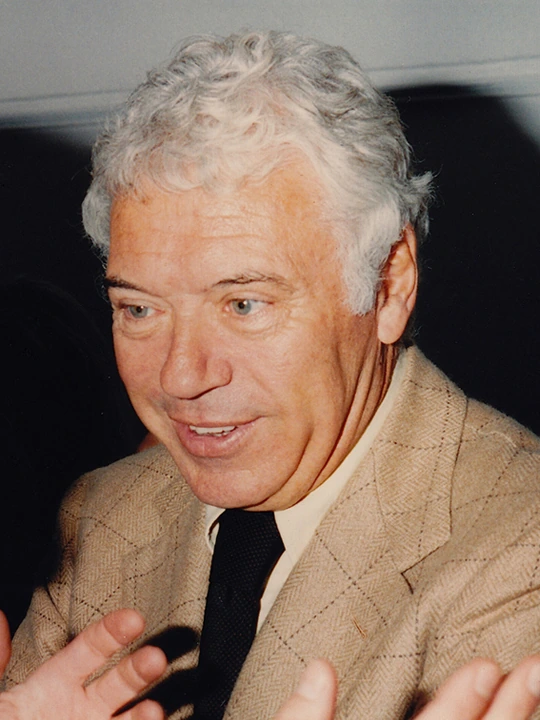
Nicola Pietrangeli (full name Nicola Chirinsky Pietrangeli) was born on September 11, 1933, and passed away on December 1, 2025, at the age of 92. He was Italy's most accomplished tennis player for the better part of six decades, winning the French Open in both 1959 and 1960, reaching the Wimbledon semifinals in 1960, and becoming the defining figure of Italian tennis until Jannik Sinner's emergence in the 2020s. He was inducted into the International Tennis Hall of Fame in 1986, a recognition that cemented his standing in the sport's global history. His Davis Cup record for Italy was legendary, and the Davis Cup maintains a dedicated player profile for him that functions as one of the clearest, most unambiguous identity anchors for anyone researching him.
If you're looking him up now, it's almost certainly because his death in late 2025 triggered renewed interest in his legacy, including his financial one. BBC Sport, Tennis.com, ESPN, and Davis Cup all published obituaries confirming both his identity and his status as a genuine all-time great. That mainstream coverage makes him a legitimate subject for wealth research, even if the public financial record is thin.
What net worth actually means (and why estimates vary)
Net worth is assets minus liabilities. Take everything someone owns (cash, property, investments, business equity, collectibles) and subtract everything they owe (mortgages, loans, taxes, other obligations). The result is their net worth. Simple in theory, difficult in practice because most of that data is private. For public figures, analysts work backwards from what IS visible: reported prize money, publicly recorded property transactions, company filings, known endorsement deals, and media reporting on major transactions.
For historical athletes like Pietrangeli, the challenge is compounded by era. Tennis prize money in the late 1950s and 1960s was a fraction of what today's players earn. The open era of professional tennis didn't even begin until 1968, which means Pietrangeli played most of his prime years as an amateur, where direct prize payouts were minimal or nonexistent. Post-retirement income from coaching, federation roles, commentary, and appearances is harder to quantify because it rarely generates the kind of public filings that a business or property transaction would. That's why estimates for players of his generation tend to be wide ranges rather than precise figures.
The net worth estimate: what the numbers say

The $1 million to $5 million range circulating on net-worth aggregator sites is the only published estimate with a specific number attached. CollegeNetWorth.com lists this range and attributes it to tournament earnings, coaching roles, and commentary work. That's a reasonable set of categories, but the site doesn't provide primary documentation, property records, or investment disclosures to back it up. CollegeNetWorth.com lists a $1 million to $5 million net worth range for Nicola Pietrangeli but does not provide primary documentation such as asset/liability records in its snippet. The range is wide by design because the underlying data is genuinely limited.
MatchStat, a tennis statistics aggregator, lists his prize money as N/A, which tells you something important: even data-focused sports sites don't have a clean earnings figure for him. That's not unusual for pre-open-era players. His major Grand Slam victories came before structured prize money existed in its modern form, so the financial return on those titles would have come indirectly through reputation, federation support, and post-career opportunities rather than direct tournament payouts.
Given all of that, a defensible working estimate for Nicola Pietrangeli's peak net worth is approximately $1 million to $3 million, with the upper end of the $5 million figure requiring undocumented assumptions about property, investments, or business interests that haven't surfaced publicly. If you are trying to estimate Nicola Fontanella net worth, you can use the same approach: start with documented income, then treat any single-number claims with caution until primary records are available. Think of the lower bound as what's plausible based on known income streams, and the upper bound as what's possible if private assets (real estate in Italy, savings, investments) were significant.
Where his wealth likely came from
Career earnings
Pietrangeli's peak competitive years ran from the mid-1950s through the mid-1960s, almost entirely in the amateur era. Prize money was either absent or symbolic. ESPN published a quote from Pietrangeli himself referencing how he spent earnings from a tournament, which confirms there was some direct compensation, but the amounts were far below what modern players collect. His French Open titles and Davis Cup appearances would have generated prestige and federation support rather than large direct payouts. After the open era began in 1968, he was already in the latter part of his career. The competitive earnings portion of his wealth, by modern standards, would be modest.
Post-career roles and endorsements
His Hall of Fame induction in 1986 and his ongoing connection to Italian tennis through federation roles and commentary work would have generated steady income over a long post-career period. Italian sports figures of his stature often serve as ambassadors, appear at events, and take advisory roles with national federations or equipment brands. No specific endorsement deals or sponsorship figures have been publicly documented for Pietrangeli, but his longevity in public life suggests consistent (if not headline-level) income from these sources through at least the early 2000s.
Investments and business interests
There is no publicly available record of specific investments, business ownership, or major financial transactions tied to Pietrangeli. That doesn't mean they don't exist, only that they haven't been reported or disclosed in any source reviewed here. For Italian residents, property records and business filings exist through Italian public registries, but none of that data has been aggregated into English-language financial reporting for him. Any estimate that assigns a specific investment portfolio or business equity figure to him without citing Italian property records or company filings should be treated with skepticism.
Assets, liabilities, and what affects the bottom line

For someone who lived in Italy for most of his life and had a long career in a high-profile sport, the most likely asset categories would be Italian real estate, personal savings and investments, and any intellectual property or licensing related to his name and legacy. On the liability side, there are no public records of bankruptcies, outstanding loans, or major financial obligations. In Italy, bankruptcy records and financial obligations are tracked through official civil registries, and nothing in the publicly available reporting suggests significant liabilities. The absence of liability evidence is a positive signal, though it's worth noting that absence of evidence isn't the same as evidence of absence.
Because he passed away in December 2025, his estate is now the relevant financial entity. Estate values in Italy go through official probate processes, and if any public filings emerge from that process, they would be the most reliable update to any net worth estimate. Watch for Italian inheritance or estate reporting if you need a more current or precise figure.
Making sure you have the right person
Name confusion is a real issue in net worth research, and it's worth being deliberate here. If you are specifically researching Nicola Botticini net worth, this article’s identity checks help you avoid mixing up similarly named athletes. Nicola Pietrangeli is a fairly distinctive name, but his full legal name was Nicola Chirinsky Pietrangeli, born September 11, 1933, in Tunis (then under French protectorate), died December 1, 2025.
Those biographical anchors, his Davis Cup player profile, and the International Tennis Hall of Fame induction in 1986 are your clearest confirmation that you have the right person. If you encounter a net worth figure attributed to someone named "Nicola Pietrangeli" without those biographical details attached, verify before using it. There are other Italian athletes and public figures named Nicola in various sports and creative fields, so cross-referencing the birth and death dates is the fastest disambiguation check.
How to verify the number and what to check next
The key discipline in net worth research is separating sources that show their work from those that don't. Here's how to evaluate what you find.
| Source Type | Reliability | What to Look For |
|---|---|---|
| Net-worth aggregator blogs (e.g., CollegeNetWorth.com) | Low to medium | Do they list specific assets, transactions, or documented income? If not, the figure is an estimate built on estimates. |
| Italian property registries (Agenzia delle Entrate) | High | Public property records that could confirm real estate holdings — most useful for Italian residents |
| International Tennis Hall of Fame records | Medium | Confirms career context but doesn't quantify earnings |
| Mainstream sports obituaries (BBC Sport, Tennis.com, ESPN) | High for biography, low for financials | Useful for identity confirmation and career timeline; rarely include financial disclosures |
| Davis Cup official player profile | High for career data | Confirms identity and career record; no financial data |
| Italian estate/probate filings (post-December 2025) | High if available | Most likely source of updated, primary-source wealth data following his death |
Red flags to watch for: any site that lists a precise single figure (e.g., "$2.4 million") without linking to property records, court filings, or verified earnings data is fabricating precision. Net worth estimates for pre-open-era tennis players are inherently approximate. A range is more honest than a specific number in this case. Also watch for figures that haven't been updated since before December 2025, his death changes the financial picture because his estate is now the relevant entity and any active income streams have ceased.
If you want to dig further, the most productive next steps are checking Italian public property registries for real estate tied to the Pietrangeli name in Rome (where he was based for much of his life), monitoring any Italian probate reporting that may emerge from his estate, and checking whether the Italian Tennis Federation (Federazione Italiana Tennis e Padel) has published anything about his financial legacy or memorial arrangements that might hint at estate size. Those sources won't be fast or easy to access from outside Italy, but they're the right ones to pursue if the $1M–$5M range isn't specific enough for your purposes.
Putting it in context
A net worth of $1 million to $3 million is roughly equivalent to one to three mid-range homes in a major Italian city. For a player who won two Grand Slam titles and defined Italian tennis for a generation, that might seem modest. But it's entirely consistent with what you'd expect from someone whose career peak predated professional prize money and who earned most of his post-career income through advisory, ambassador, and media roles rather than business ventures. His wealth was always in his reputation and his legacy to Italian tennis, not in documented financial assets. That context matters when you're evaluating the numbers.
For readers exploring other Italian figures in the same category, the research process is similar across names like Nicola Ventola (the footballer) or Nicola Formichetti (the fashion director) where career-specific earnings, post-career roles, and undocumented private assets create comparable estimation challenges. If you want a broader, comparison-style look at how these kinds of figures are often summarized online, you can also check Nicola toffolo net worth similar across names like Nicola Ventola.
If you're also researching Nicola Ventola net worth, the same caveats apply: most figures are estimates built from public signals rather than verified asset records. If you are also researching Nicola Formichetti net worth, the same approach applies: prioritize documented income signals and treat missing records as a reason to rely on ranges. The methodology is the same: start with what's documented, be honest about what isn't, and flag the range rather than forcing a false precision.
FAQ
Why do net worth sites show a single number for Nicola Pietrangeli when the article suggests a wide range?
Most aggregators use the same limited public signals, then convert them into one “rounded” figure for readability. Unless the site provides a breakdown tied to verifiable records (property transactions, probate filings, or documented income sources), the single number should be treated as a convenience estimate, not a measurement.
Did Pietrangeli’s French Open titles in 1959 and 1960 automatically translate into large prize money?
Not in the way it does for modern players. In the pre-open era, major titles were often more valuable for reputation, federation support, and later earning opportunities than for direct, bankable prize payouts. That is why estimates rely more on post-career roles than on tournament earnings alone.
How can I tell whether a “Nicola Pietrangeli net worth” figure is about the tennis player or someone else?
Check identity anchors together, not individually. Use the full legal name (Nicola Chirinsky Pietrangeli), birth date (September 11, 1933), death date (December 1, 2025), and the French Open years (1959, 1960). A true match should also align with his Davis Cup identity.
What would be the best primary document to confirm Pietrangeli’s estate value after his death?
A probate or inheritance-related filing within Italy tied to his estate would be the most direct confirmation. The practical challenge is that English-language reporting may not aggregate those documents, so you may need Italian probate or civil registry outputs to update any estimate accurately.
Could Pietrangeli’s net worth be higher than $5 million if real estate or savings were significant?
Yes, it’s possible, but you would need evidence. The article explains that the upper end would require assumptions about private assets that are not publicly aggregated. Without verifiable property records, business ownership, or documented investment disclosures, it’s speculation rather than an update.
Are “lack of liability records” a strong sign that his net worth estimates are accurate?
It’s a weak-to-moderate positive signal, not proof. For older public figures, debts may not be well represented in English-language sources, and “no widely reported liabilities” can simply mean the details weren’t aggregated, not that they didn’t exist.
If I want to estimate net worth myself, what categories should I start with given his era?
Start with identifiable post-career income signals that are easier to verify (federation advisory work, media appearances, commentary roles, and any documented licensing tied to his name). Then treat pre-open-era earnings as lower-confidence inputs, and consider that most wealth accumulation for him likely came indirectly through reputation and professional opportunities rather than prize payouts.
Do updates after December 2025 matter for Pietrangeli’s net worth figures?
Yes. After a death, the relevant financial entity becomes the estate, and any final value can change once probate and asset transfers are accounted for. If a figure hasn’t been updated since before his death, it may reflect a pre-estate snapshot that is no longer applicable.
What’s a practical way to handle misinformation when comparing multiple net worth articles?
Compare whether each source shows its work. If it provides only a single dollar figure with no visible methodology, it’s likely derived from the same assumption set as others. Prefer sources that show a category breakdown (income streams, timing, and supporting evidence), even if their final number is still a range.
Does Pietrangeli’s net worth likely include intellectual property or licensing related to his name?
It could. The article suggests legacy-related licensing as a plausible asset category, but it also notes that specific licensing deals are not publicly documented. If you want a tighter estimate, look for evidence of official trademarks, named memorial arrangements, or paid endorsements tied to his legacy.
Next Article
Nicolas Todt Net Worth: Updated Estimate, Sources, and How to Verify
Nicolas Todt net worth estimate with dated ranges, sources, disambiguation, and steps to verify and avoid rumors.